Security work requires more than just showing up in uniform. A professional security guard must be alert, responsible, and prepared to handle a wide range of situations. That is why structured training is so important. Through formal security officer training courses, individuals gain the skills needed to perform their duties confidently and professionally.
Whether someone is new to the field or looking to build a long-term career, security guard training provides practical skills that apply directly to real-world work environments.
Understanding Roles and Responsibilities
One of the first skills learned during security guard training is understanding the role of a security officer. Training helps students clearly define what is expected of them on the job.
Security officer training courses cover:
-
Daily duties and patrol responsibilities
-
Professional conduct and workplace behavior
-
Interaction with the public and staff
-
Following employer and site-specific procedures
This foundation helps guards avoid confusion and perform their role with confidence and consistency.
Situational Awareness and Observation Skills
Situational awareness is one of the most important skills a security officer can have. Training teaches guards how to remain alert and aware of their surroundings at all times.
Through structured instruction, students learn how to:
-
Identify unusual or suspicious behavior
-
Monitor entry and exit points
-
Recognize potential safety risks
-
Stay focused during long shifts
These observation skills help prevent incidents before they escalate.
Communication Skills
Clear communication is essential in security work. During training, students learn how to communicate professionally and effectively in different situations.
Security officer training courses focus on:
-
Verbal communication with the public
-
Radio and written communication
-
Reporting incidents accurately
-
De-escalating tense situations through calm dialogue
Strong communication skills help security officers manage situations without unnecessary conflict.
Legal Awareness and Proper Conduct
Security guards must understand the legal boundaries of their role. Training provides essential knowledge about what a security officer can and cannot do while on duty.
Students learn about:
-
Legal authority and limitations
-
Use-of-force guidelines
-
Detention and reporting procedures
-
Importance of documentation
This knowledge protects both the security officer and the employer from legal issues.
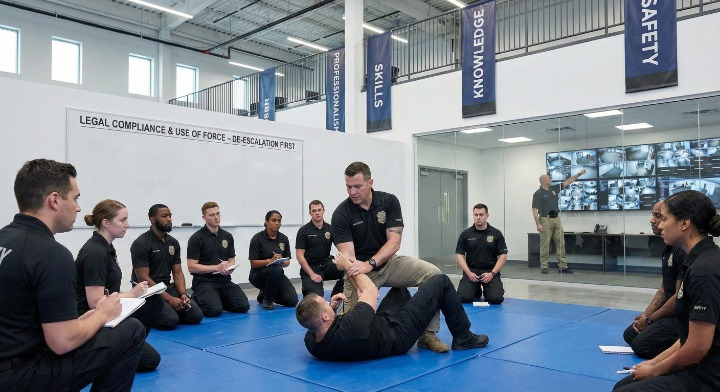
Conflict Management and De-Escalation
Not every situation requires force. One of the most valuable skills taught in security training is conflict de-escalation.
Through practical lessons, guards learn how to:
-
Stay calm during confrontations
-
Use verbal techniques to reduce tension
-
Handle difficult individuals professionally
-
Avoid unnecessary physical intervention
These skills improve safety for everyone involved.
Emergency Response Skills
Security officers are often the first to respond in emergencies. Training prepares students to act quickly and responsibly when it matters most.
Security guard training covers:
-
Emergency response procedures
-
Evacuation protocols
-
Handling medical emergencies until help arrives
-
Coordinating with emergency services
Being prepared for emergencies is a critical part of professional security work.
Reporting and Documentation
Accurate reporting is a key responsibility of a security officer. Training teaches guards how to document incidents clearly and correctly.
Students learn:
-
How to write incident reports
-
What details to include
-
Why accurate documentation matters
-
How reports protect both the officer and the organization
Good reporting skills are essential for accountability and professionalism.
Professional Ethics and Accountability
Security officers are placed in positions of trust. Training emphasizes ethical behavior and responsibility at all times.
Security officer training courses reinforce:
-
Respect for others
-
Fair and unbiased decision-making
-
Accountability for actions
-
Maintaining professionalism on duty
Ethical conduct builds trust with employers, clients, and the public.
Building Confidence for Real-World Work
Training is not just about knowledge. It is about confidence. By practicing real-world scenarios and learning proper procedures, security officers feel more prepared when they begin working.
Confidence helps guards:
-
Make better decisions
-
Communicate more effectively
-
Respond calmly under pressure
-
Perform duties with professionalism
This confidence is a direct result of proper training.
Why These Skills Matter for Career Growth
The skills learned during security guard training are not limited to entry-level roles. They create a foundation for long-term career growth.
With strong training, security officers can advance into:
-
Supervisory positions
-
Specialized security roles
-
Corporate or facility security
-
Leadership and training roles
Security officer training courses help turn a job into a career.
Conclusion
Security guard training provides the essential skills needed to succeed in the security industry. From situational awareness and communication to legal knowledge and emergency response, professional training prepares individuals for real responsibilities on the job.
Completing structured security officer training courses helps build confidence, improve employability, and support long-term career growth. With the right skills and preparation, security officers are better equipped to protect people, property, and themselves while maintaining professionalism at all times.