Situational awareness is one of the most important skills a security professional can develop. It is the ability to observe surroundings, recognize potential risks, and respond appropriately before a situation escalates. For security officers, this skill can mean the difference between preventing an incident and reacting too late.
Professional training plays a major role in building strong situational awareness. Through structured learning and real-world scenarios, security officer training courses teach individuals how to stay alert, think critically, and make informed decisions in dynamic environments.
What Is Situational Awareness in Security Work?
Situational awareness in security involves more than simply watching what is happening. It requires understanding context, identifying abnormal behavior, and anticipating potential threats.
A situationally aware security officer can:
-
Notice changes in behavior or environment
-
Identify risks before they become problems
-
Respond calmly under pressure
-
Make decisions based on observation, not assumptions
These abilities are not instinctive for most people. They are developed through training and experience.
Why Situational Awareness Is Critical for Security Officers
Security officers often work in environments where conditions can change quickly. Crowded areas, public spaces, and high-traffic locations all require constant awareness.
Without proper situational awareness, a security officer may:
-
Miss early warning signs
-
React too slowly
-
Escalate a situation unintentionally
-
Put themselves or others at risk
Professional training reduces these risks by teaching officers how to observe and assess situations effectively.
How Professional Training Builds Awareness Skills
Learning What to Look For
One of the first ways training improves situational awareness is by teaching officers what to observe. Training helps students understand common indicators of risk, including:
-
Unusual behavior or movement
-
Changes in routine or environment
-
Signs of agitation or distress
-
Unauthorized access attempts
Knowing what to look for allows officers to stay focused and proactive.
Developing Observation Techniques
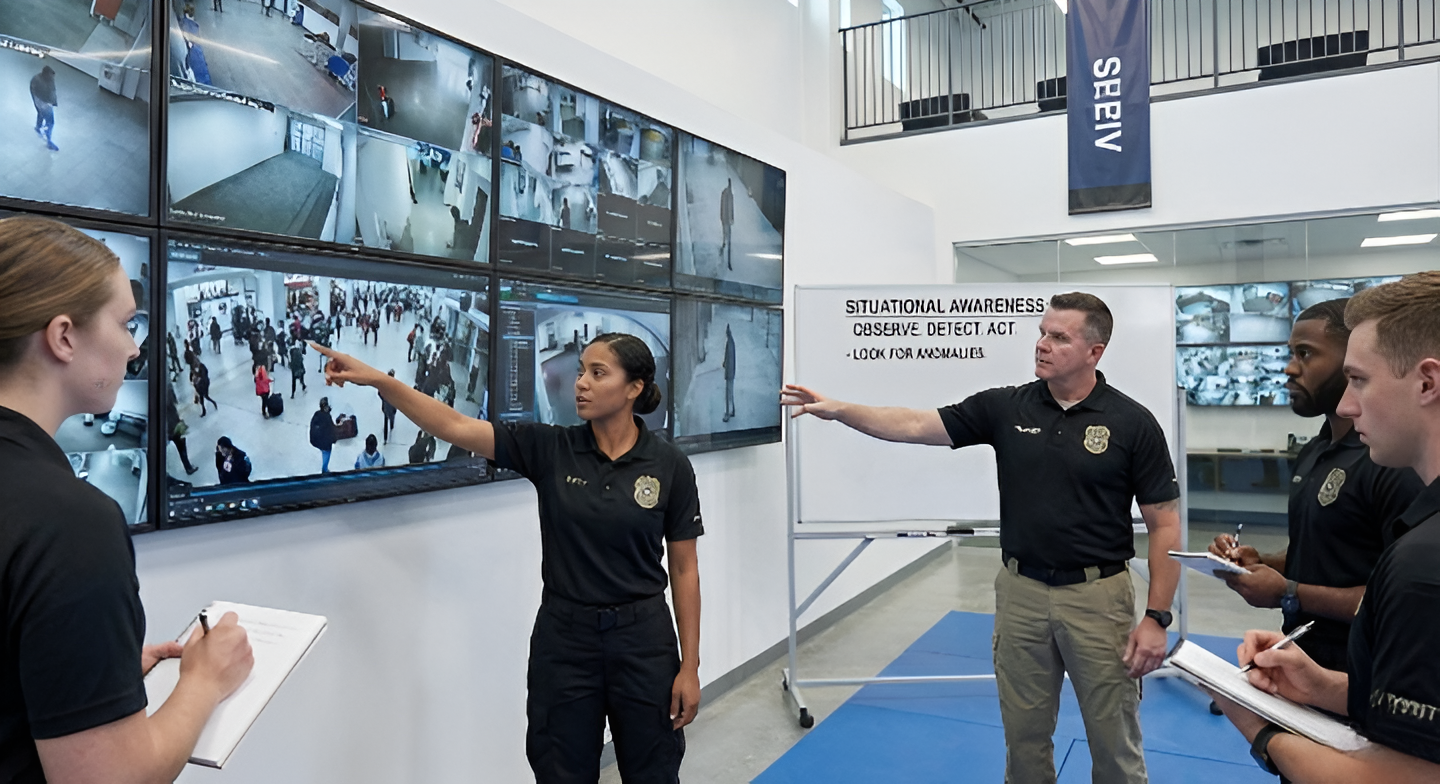
Professional training emphasizes active observation. Security officer training courses teach guards how to scan environments, monitor entry points, and remain alert during long shifts.
These techniques help officers:
-
Stay attentive without becoming distracted
-
Balance awareness with other responsibilities
-
Avoid complacency
Observation skills improve with practice and guided instruction.
Improving Decision-Making Under Pressure
Situational awareness is closely tied to decision-making. Training prepares officers to think clearly when faced with unexpected situations.
Through scenario-based instruction, students learn how to:
-
Evaluate risks quickly
-
Choose appropriate responses
-
Avoid panic or overreaction
-
Follow proper procedures
This preparation helps officers act confidently and responsibly in real-world situations.
Role of Scenario-Based Training
One of the most effective methods for improving situational awareness is scenario-based training. These exercises simulate real-life situations security officers may encounter on the job.
Scenario-based training helps students:
-
Practice recognizing threats
-
Apply observation skills in real time
-
Learn from controlled mistakes
-
Build confidence through repetition
This hands-on approach strengthens awareness far more than theory alone.
Understanding Human Behavior
Situational awareness also involves understanding people. Professional training teaches security officers how to read body language, tone, and behavior patterns.
Officers learn to:
-
Identify signs of stress or aggression
-
Recognize suspicious behavior
-
Communicate effectively to defuse tension
Understanding human behavior allows officers to intervene early and prevent escalation.
Reducing Risk Through Awareness
When security officers are trained to remain situationally aware, risks are reduced for everyone involved. Early detection of potential issues often leads to safer outcomes.
Professional training helps officers:
-
Prevent incidents before they occur
-
Maintain control in challenging situations
-
Protect themselves and others
-
Support a safer environment overall
Awareness allows officers to stay one step ahead rather than reacting after the fact.
Situational Awareness and Professional Confidence
Confidence and situational awareness go hand in hand. Training gives officers the tools they need to trust their judgment.
When officers are confident:
-
They communicate more effectively
-
They respond calmly under pressure
-
They make better decisions
-
They earn trust from employers and the public
This confidence comes from preparation, not guesswork.
Why Training Quality Matters
Not all training programs focus equally on situational awareness. Choosing a reputable training provider ensures students receive instruction that reflects real-world conditions.
Programs offered by professional institutions such as Blue Training Academy focus on practical skills, realistic scenarios, and decision-making techniques that improve awareness on the job.
Conclusion
Situational awareness is a critical skill for any security professional, and it is developed through proper training. Professional security officer training courses help individuals learn how to observe, assess, and respond effectively in real-world environments.
By improving awareness, training reduces risk, enhances safety, and builds confident security officers who are prepared to handle their responsibilities responsibly. For anyone pursuing a career in security, professional training is the key to developing situational awareness that makes a real difference on the job.