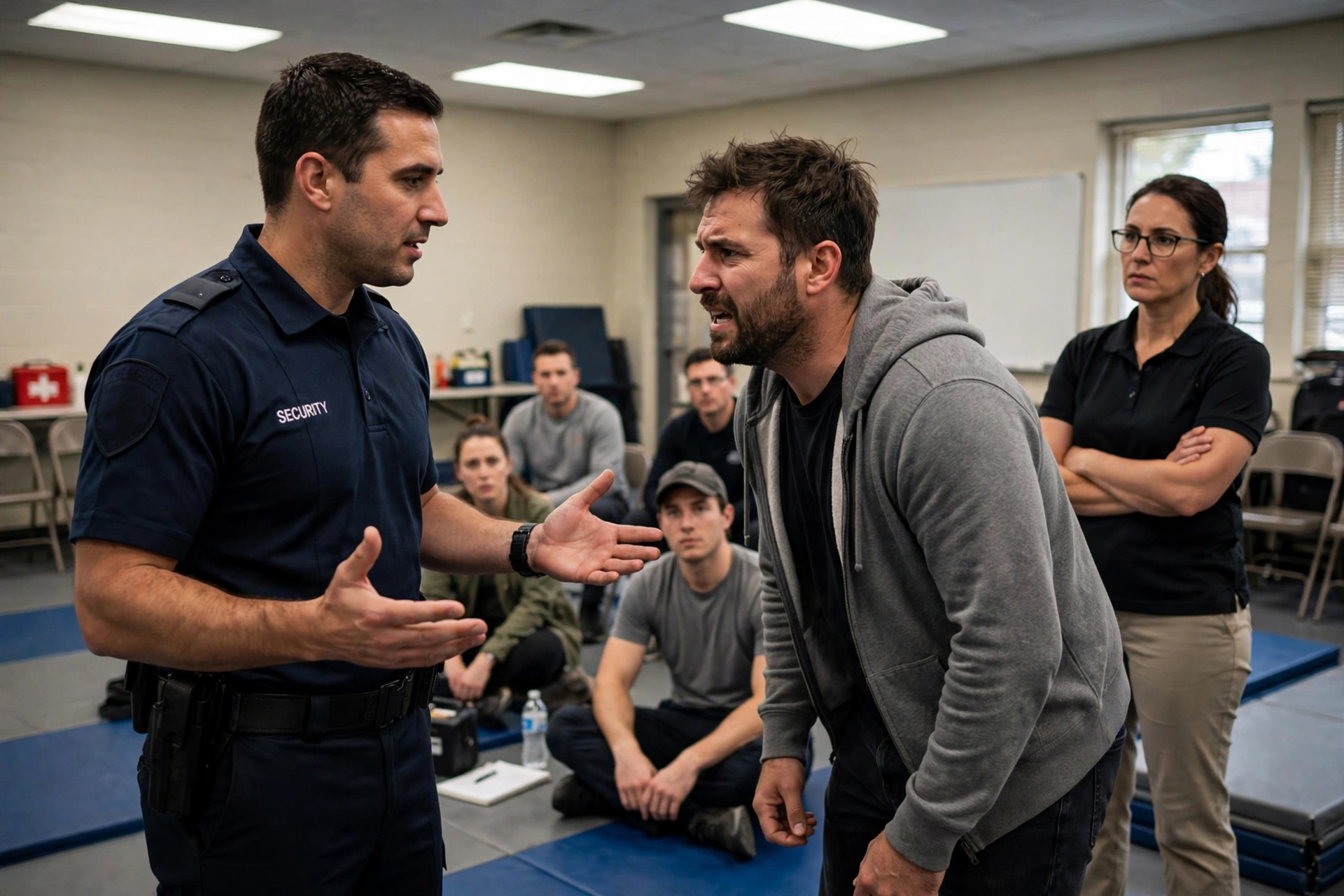
In modern private security, an officer’s most effective defense tool is not a baton, pepper spray, or firearm it is their voice. While physical tactics and surveillance equipment remain critical components of security operations, the vast majority of daily interactions rely entirely on verbal engagement. An officer who can defuse a tense situation using clear, authoritative, and strategic communication protects not only their site and team, but also their employer from severe legal and financial liability.
State licensing standards increasingly emphasize non-violent crisis intervention. At Blue Training Academy, de-escalation protocols and tactical communication form the bedrock of our professional security certification curriculum.
Here is why mastering tactical communication is mandatory for today’s professional security officers and how proper training transforms workplace conflict management.
What Is Tactical Communication in Private Security?
Tactical communication is the deliberate use of tone, body language, spatial positioning, and word choice to gain voluntary compliance from agitated, non-compliant, or hostile individuals. Unlike casual conversation, tactical communication is an active defensive skill designed to assert control without escalating tension.
At Blue Training Academy, officers are taught that successful de-escalation hinges on managing three core communication channels:
- Verbal Presence: Selecting direct, professional language that sets clear boundaries without insulting or provoking the subject.
- Vocal Dynamics: Controlling pitch, pace, and volume to project calm authority during high-stress encounters.
- Non-Verbal Stance: Utilizing open hand gestures, maintaining tactical distance, and projecting confident, non-aggressive body language.
Reducing Liability and Physical Safety Risks
Physical altercations introduce substantial risks to commercial properties, event venues, and security firms. When a confrontation escalates to physical force, property owners face potential civil lawsuits, medical costs, worker’s compensation claims, and reputational harm.
Properly certified security officers understand the continuum of force and prioritize verbal resolution. By employing proven de-escalation techniques, officers can:
- Neutralize verbal hostility before it turns into physical violence.
- Protect bystanders, facility staff, and fellow officers from unnecessary physical danger.
- Establish a clear legal defense showing that all reasonable non-violent efforts were exhausted before physical containment or intervention occurred.
Core De-Escalation Principles Taught at Blue Training Academy
Professional security officers do not rely on guesswork when managing volatile encounters. Blue Training Academy equips students with structured frameworks for resolving high-friction situations:
1. Active Listening and Empathy Modulation
Often, agitated individuals simply want to feel heard. Officers learn to acknowledge grievances neutrally (“I understand your frustration, but this area is restricted”) while firmly maintaining site post orders.
2. De-Personalizing Hostility
Hostile visitors frequently launch personal insults to provoke an emotional response. Our training conditions officers to remain detached, view insults as distraction tactics, and stay focused on restoring order.
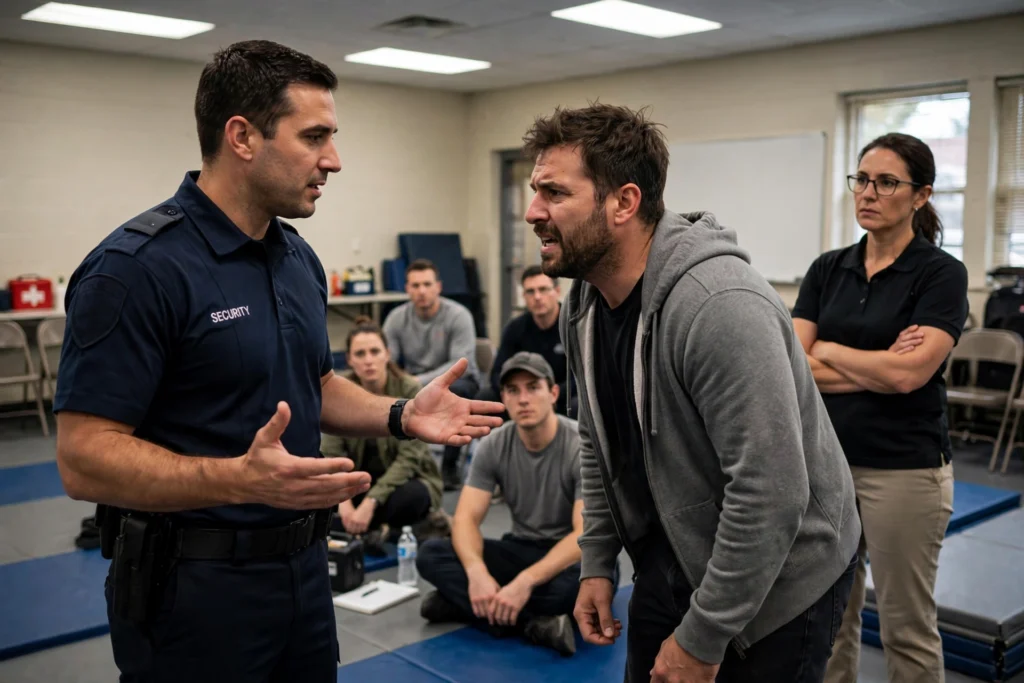
3. Offering Clear Options Over Direct Commands
When individuals feel trapped, their instinct is to fight back. Tactical communication trains guards to present clear, logical choices (“Sir, you can present your ID so I can clear your entry, or you will need to step back outside”) to encourage voluntary cooperation.
Enhancing Hospitality and Brand Reputation
For many commercial office towers, healthcare campuses, luxury residential sites, and retail centers, a security officer is the very first person a visitor encounters. An aggressive or confrontational guard alienates clients and damages the property’s brand image.
Tactical communication balances vigilant asset protection with exceptional customer service. Officers trained by Blue Training Academy learn how to enforce facility rules firmly and professionally while maintaining a welcoming, calm atmosphere for authorized staff and guests.
Building Professional Incident Reports
Communication skills extend beyond live verbal encounters; they are equally vital in written documentation. Following a verbal dispute or de-escalation attempt, officers must record detailed incident reports.
Our certification courses teach officers how to document interactions objectively, detailing the exact language used, the subject’s behavior, and the precise steps taken to defuse the situation. Clear, fact-based reports provide invaluable legal protection during internal reviews or law enforcement investigations.
Elevate Your Security Credentials with Blue Training Academy
True professional security requires composure under pressure, professional presence, and tactical restraint. Blue Training Academy is dedicated to training elite security professionals who excel at resolving conflict peacefully and effectively.
Whether you are launching your career or upgrading your current security qualifications, our state-approved certification programs give you the tactical communication tools required to excel in the field.