The private security industry is expanding rapidly, offering stable, well-paying career opportunities across commercial, residential, healthcare, and event sectors. However, stepping into a role as a professional security guard requires more than just filling out a job application. To protect both the public and property legally, aspiring security officers must obtain an official state license.
While specific regulatory requirements vary slightly by state, the core pathway to becoming a certified security professional remains consistent. Navigating the paperwork, training hours, and background checks can feel overwhelming for beginners, but Blue Training Academy is here to streamline the process.
Here is your comprehensive, step-by-step guide to obtaining your security officer license and launching your career in physical defense.
Step 1: Meet the Basic Eligibility Requirements
Before enrolling in a training course or paying state application fees, you must ensure you meet the baseline legal requirements to work in the security field. Generally, state licensing boards require applicants to:
- Meet the Age Requirement: Be at least 18 years old for unarmed security roles (often 21 years old for armed security).
- Verify Citizenship/Work Status: Be a U.S. citizen or a legal resident alien with valid authorization to work in the United States.
- Possess Basic Education: Hold a high school diploma or a GED equivalent.
- Have a Clean Criminal Record: While minor infractions may not automatically disqualify you, felony convictions or serious misdemeanors involving violence, theft, or fraud typically result in application denial.
Step 2: Complete a State-Approved Security Training Course
State regulatory boards require all security applicants to complete a mandatory number of training hours through a licensed and approved academy before they can be certified.
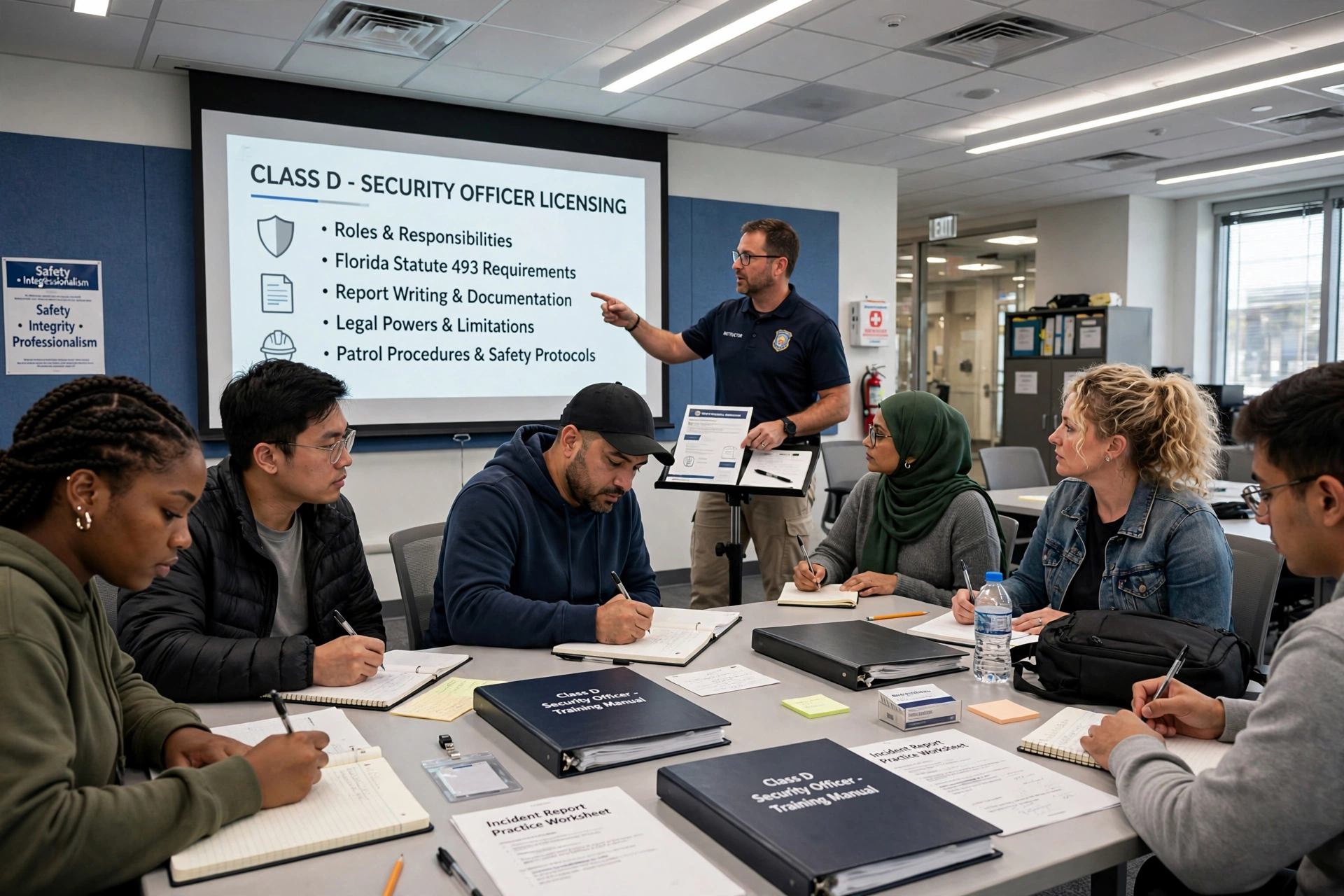
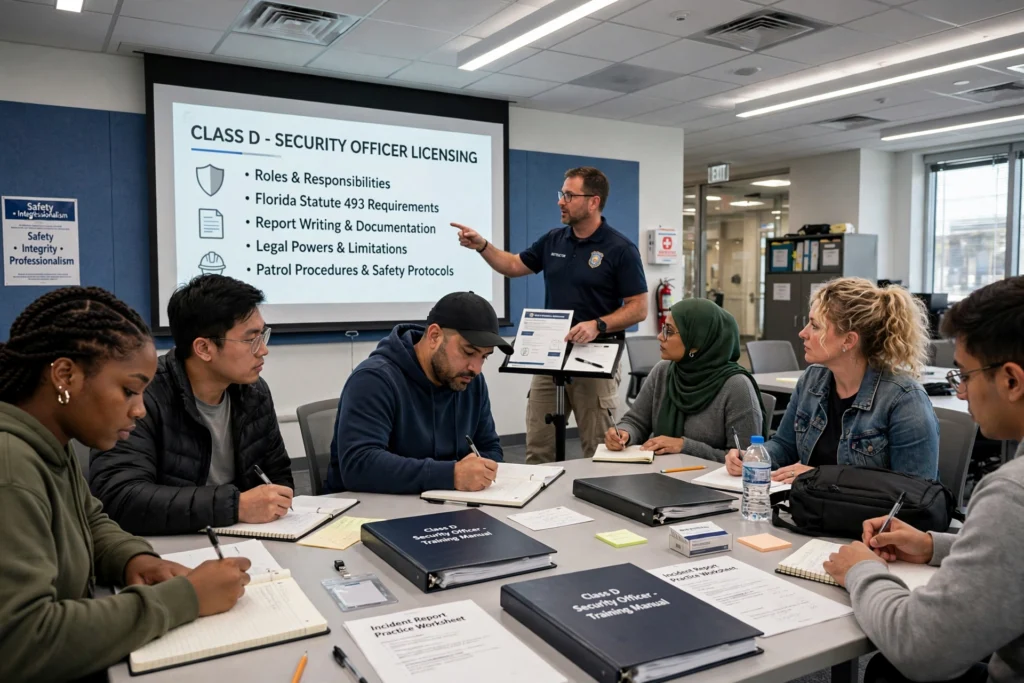
At Blue Training Academy, our comprehensive curriculum goes beyond just checking a box for the state. We prepare you for real-world scenarios. A standard unarmed security training course covers:
- Legal Powers and Limitations: Understanding citizens’ arrest, private property laws, and civil liability.
- Emergency Procedures: First response protocols for fires, medical emergencies, and active threats.
- Tactical Communication: Verbal de-escalation techniques and conflict resolution.
- Patrol and Access Control: Techniques for securing perimeters, verifying credentials, and identifying physical vulnerabilities.
- Report Writing: Crafting accurate, objective incident reports for facility managers and law enforcement.
Step 3: Pass the Background Check and Fingerprinting
Because security officers are entrusted with protecting people and high-value assets, state governments require a rigorous background check.
Once you begin your certification process, you will be required to submit electronic fingerprints. These fingerprints are run through both state law enforcement databases and the FBI to ensure you do not have a disqualifying criminal history. Blue Training Academy helps guide our students through finding approved fingerprinting locations to ensure this step is handled without delay.
Step 4: Pass the Final Certification Exam
After completing your required classroom or online training hours, you must demonstrate your understanding of the material. Most states require candidates to pass a standardized written exam.
The exam tests your knowledge of the legal boundaries of a security officer, emergency response protocols, and ethical conduct. Because Blue Training Academy utilizes experienced instructors and real-world scenarios, our students are thoroughly prepared to pass their state exams with confidence.
Step 5: Submit Your Application to the State Licensing Board
Once you have your training completion certificate, your fingerprint clearance, and your passing exam score, it is time to submit your official application to the state licensing agency.
This step usually involves:
- Filling out the state’s formal security officer application (often done via an online portal).
- Uploading your training certificates.
- Paying the required state registration and processing fees.
Once submitted, the state will review your file. Upon approval, you will receive your official Security Officer License (often referred to as a “Guard Card”), legally authorizing you to work for a private security agency.
Launch Your Career with Blue Training Academy
The quality of your initial training dictates how prepared you will be on your first day on the job. Blue Training Academy is dedicated to producing elite, highly trained security professionals who stand out to top employers.
We offer flexible class schedules, expert instruction from seasoned industry professionals, and complete guidance through the state licensing maze.