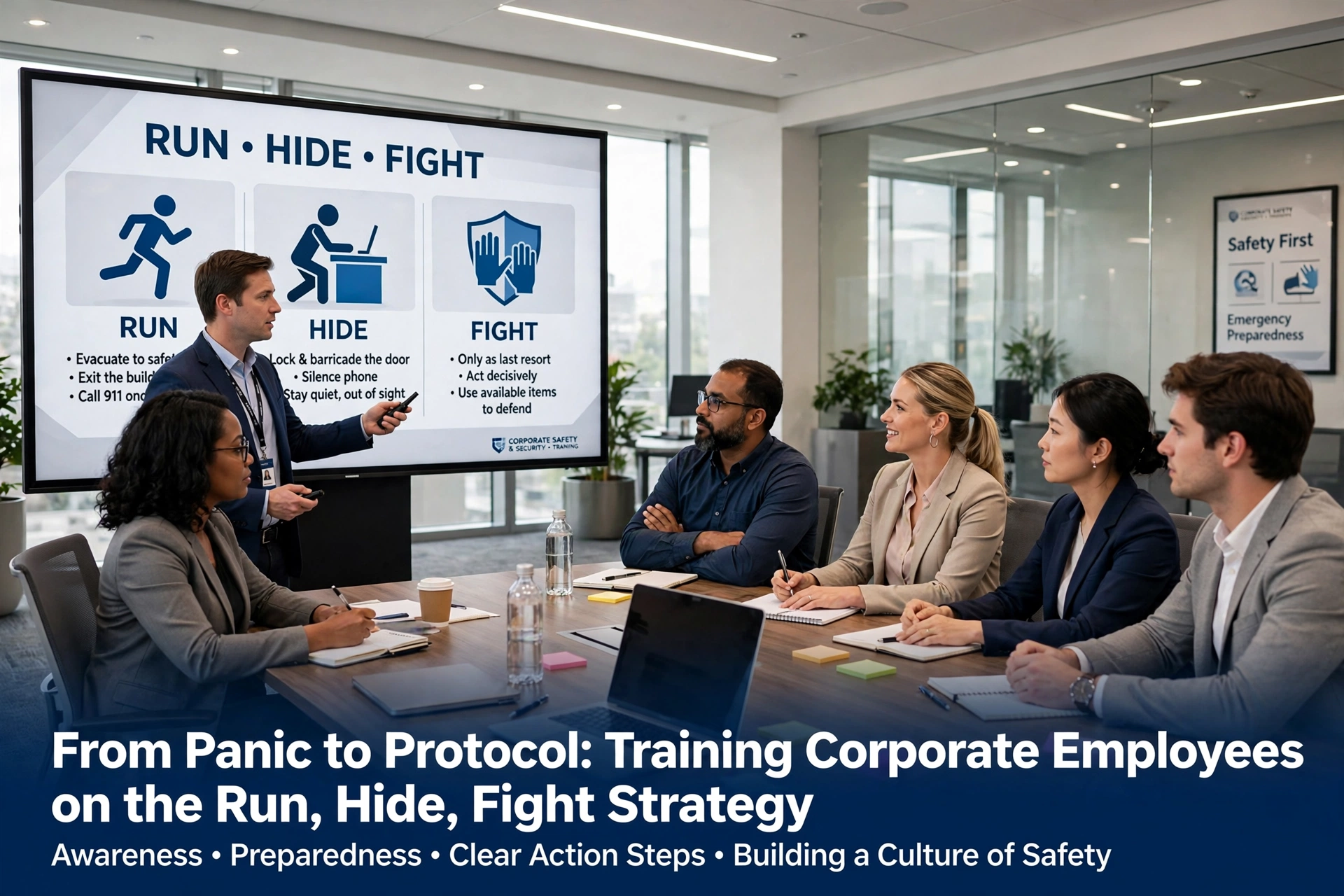
Conducting an active threat drill in a corporate environment requires a careful balance. On one hand, employees must build genuine muscle memory and practical familiarity with emergency protocols. On the other hand, hyper-realistic or unannounced simulations can induce unnecessary panic, trigger severe psychological distress, or cause physical injuries.
The primary goal of emergency preparedness is education, empowerment, and confidence—not fear. To achieve this, organizations must move away from sensationalized scare tactics and implement structured, progressive, and safe drill methodologies.
Blue Training Academy works with organizations to design, manage, and facilitate active threat exercises that prioritize participant safety while reinforcing critical life-saving protocols. Here is how companies can conduct effective, realistic, and psychologically safe active threat drills for corporate staff.
1. Adopt a Phased Training Approach: Crawl, Walk, Run
Throwing employees directly into a high-speed dynamic drill without prior instruction is a recipe for confusion and injury. Effective corporate preparedness follows a phased model that builds comprehension incrementally.
- Phase 1: Classroom and Digital Learning (Crawl): Introduce core concepts such as the “Run, Hide, Fight” framework, evacuation routes, and situational awareness through interactive presentations, case studies, and discussions.
- Phase 2: Tabletop Exercises and Walkthroughs (Walk): Department leads, floor wardens, and HR personnel work through hypothetical scenarios around a conference table. This is followed by slow, unhurried physical walkthroughs of primary and secondary exit routes, barricade points, and safe staging zones.
- Phase 3: Functional, Controlled Drills (Run): Execute a coordinated drill where employees practice real-time decision-making, door barricading, and evacuation at a controlled pace.
2. Eliminate Unannounced and High-Stress Shock Tactics
Unannounced simulations that use blank gunfire, masked actors, or fake weapons can cause genuine trauma, cardiovascular emergencies, and physical trampling injuries. Industry safety standards and risk management best practices strongly discourage unannounced active shooter simulations.
- Provide Clear, Advanced Notice: Inform all employees well ahead of time regarding the date, exact time window, and scope of the drill.
- Repeat In-Drill Disclaimers: Use overhead public address systems and internal alert channels that clearly state: “This is a planned safety drill. Repeat, this is only a drill.”
- Establish Opt-Out and Support Protocols: Offer alternative learning formats for employees with relevant trauma histories, sensory sensitivities, or physical limitations.
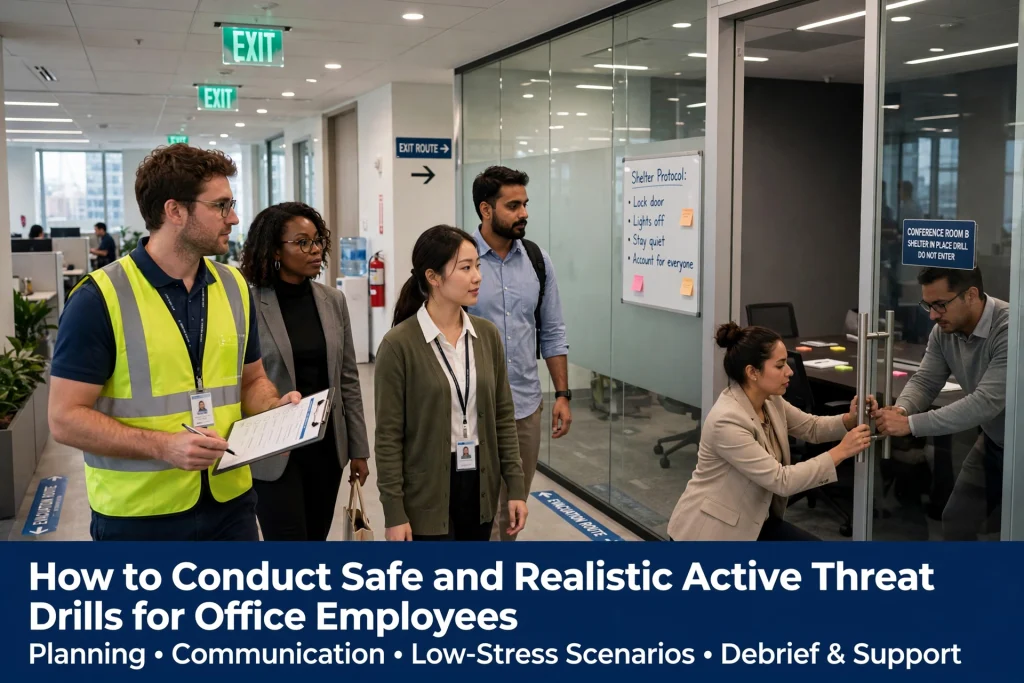
3. Focus on Practical Muscle Memory and Environmental Adaptation
A safe drill should focus on the mechanical and physical skills that save lives during critical incidents, rather than an imaginary assailant; direct attention to interacting with the physical workspace.
Key functional actions to reinforce during drills include:
- Securing and Barricading Entryways: Practice using existing office furniture—heavy conference tables, filing cabinets, and door wedges—to physically reinforce inward- and outward-swinging doors.
- Testing Communication Systems: Verify that mass-notification text systems, automated lock controls, and PA announcements function without delays or technical errors.
- Mapping Secondary Exits: Ensure personnel physically navigate emergency stairwells, back-of-house utility corridors, and service doors rather than defaulting to the main lobby elevators.
- Practicing Cover vs. Concealment: Teach employees the difference between visual concealment (glass conference rooms, drywall) and true ballistic cover (concrete pillars, steel beams).
4. Designate Safety Monitors and Establish “Halt” Protocols
Every active threat drill must operate with strict safety oversight to prevent accidental injuries during movement or evacuation.
- Appoint Dedicated Safety Observers: Position trained safety marshals or Blue Training Academy instructors across every floor and stairwell. Observers wear high-visibility vests and do not participate as role-players; their sole job is monitoring physical safety.
- Implement a Universal Stop Command: Establish a clear safety phrase (such as “Code Red Real-World” or “Safety Freeze”) that immediately halts the entire exercise if someone slips, falls, or experiences a medical issue.
- Conduct Pre-Drill Hazard Sweeps: Inspect stairwells, corridors, and exits before the drill to remove tripping hazards, loose cords, or cleaning equipment.
5. Conduct a Structured Post-Drill Debrief and Feedback Review
The most valuable phase of any safety drill occurs immediately after it concludes. A structured debriefing identifies operational bottlenecks, communication failures, and physical vulnerabilities before a real emergency happens.
- Immediate Team Huddles: Allow departmental teams five to ten minutes immediately following the drill to share initial reactions, ask questions, and decompress.
- Floor Warden Hotwash: Convene safety coordinators, facility managers, and training instructors to review what worked smoothly and where delays occurred.
- Facility Action Items: Document physical deficiencies identified during the drill—such as jammed emergency exit latches, non-functioning speakers, or missing first aid supplies—and assign immediate repair deadlines.
- Anonymous Employee Surveys: Provide a digital feedback channel for employees to share constructive feedback or voice safety concerns regarding the exercise.
Partner with Blue Training Academy for Expert Drill Facilitation
Designing an active threat training program that is thorough, compliant, and supportive of employee well-being requires experienced instructional guidance. Blue Training Academy specializes in corporate risk assessments, emergency action plan development, and expert-led workplace safety drills tailored to corporate environments.
Equip your organization with safe, realistic, and empowering emergency preparation. Contact Blue Training Academy today to schedule a corporate safety consultation:
- Website: bluetrainingacademy.com