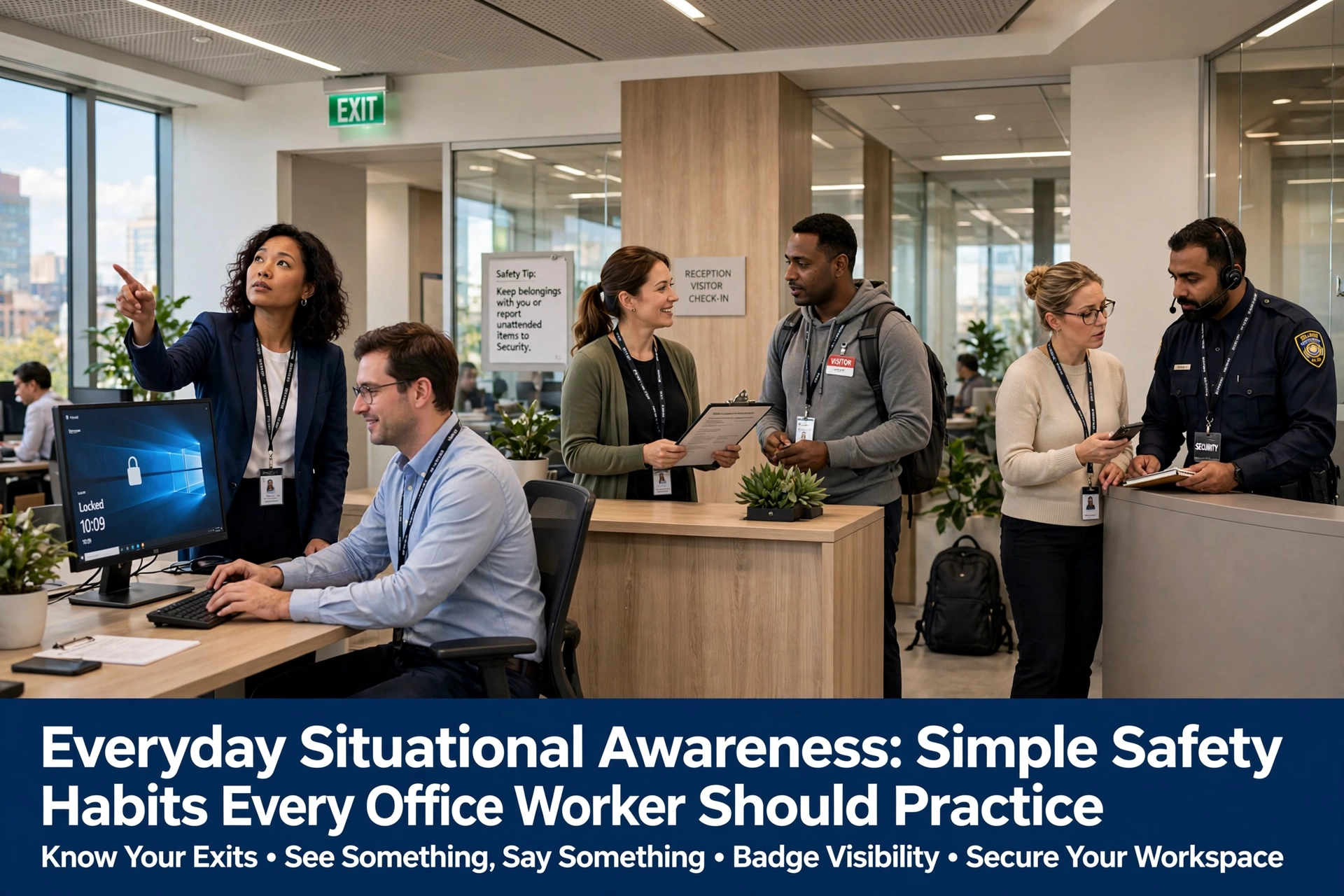
In the modern corporate environment, it is incredibly easy to fall into a comfortable, predictable routine. You park in the same garage, walk through the same lobby, grab coffee from the same breakroom, and sit at the same desk. While this routine breeds efficiency, it also creates complacency. When we operate on autopilot, our brains filter out critical details, leaving us vulnerable to emerging security threats, workplace accidents, or interpersonal conflicts.
Situational awareness is often misunderstood as paranoia or hyper-vigilance. In reality, it is simply a relaxed, mindful state of alertness. It means being present in your environment, understanding what is happening around you, and recognizing potential risks before they escalate.
At Blue Training Academy, our corporate safety programs emphasize that the most effective security measure is a proactive, observant workforce. Building everyday situational awareness does not require tactical training; it requires building simple, consistent daily habits. Here are the foundational safety practices every office worker should adopt.
Ditch the Digital Distractions During Transitions
The most vulnerable moments of your workday are not spent at your desk; they occur during transitions. Walking from your car to the building, navigating stairwells, and moving through public lobbies are high-risk periods.
Unfortunately, this is also when most professionals pull out their phones to check emails or put on noise-canceling headphones.
- The Habit: Institute a strict “eyes up” rule during environmental transitions. Keep your phone in your pocket and your headphones off until you are safely situated inside your secure office environment.
- The Benefit: You reclaim your peripheral vision and your hearing, allowing you to notice approaching vehicles, unauthorized individuals, or safety hazards in your path.
Establish the “Baseline” of Your Workplace
To recognize a potential threat, you must first know what normal looks like. In security terms, this is called establishing a baseline. Every office has a natural rhythm a standard flow of employee traffic, typical delivery times, and expected noise levels.
- The Habit: Take a few moments each week to actively observe the normal cadence of your floor. Notice who the regular couriers are, what the standard dress code looks like, and how visitors are typically escorted.
- The Benefit: When you know the baseline, anomalies stand out instantly. A person wandering the floor without a visitor badge, an unattended heavy backpack in a stairwell, or an individual demonstrating visibly agitated behavior will immediately trigger your attention, allowing you to notify security early.
Always Identify Your Exits
When attending a meeting on a new floor, visiting a client’s office, or sitting down in a large corporate cafeteria, most people only register the door they used to enter. In an emergency, whether a fire alarm or an active threat, that primary entrance can quickly become a dangerous bottleneck.
- The Habit: Play the “exit game.” Whenever you enter a new room, take three seconds to identify at least two ways out, including emergency stairwells or secondary service doors.
- The Benefit: If an evacuation is required, your brain will not have to waste critical seconds searching for a route or following a panicked crowd. You will already have a mental map of your escape path.
Enforce Access Control and Prevent Tailgating
Corporate security infrastructure such as keycard scanners, turnstiles, and locked lobbies is only as effective as the employees using it. “Tailgating” occurs when an unauthorized person politely holds the door or slips in right behind an employee who has just badged into a secure area.
- The Habit: Embrace the awkwardness of enforcing security. Do not hold secure doors open for people you do not recognize, even if they look like they belong or are carrying coffee. Politely ask them to use their own badge or direct them to the reception desk.
- The Benefit: You actively prevent social engineering tactics and ensure that every individual inside the facility has been properly vetted and logged by the corporate security system.
Trust Your Intuition
Humans possess a highly evolved subconscious alarm system. Long before your logical brain can articulate exactly what is wrong, your body will often register that a situation is dangerous. This is commonly felt as a sudden sense of dread, the hairs on your neck standing up, or a “gut feeling” that something is off.
- The Habit: Never let politeness override your survival instincts. If an elevator ride with a stranger feels unsafe, step off. If a visitor’s behavior makes you deeply uncomfortable, report it to HR or facility security immediately.
- The Benefit: Permitting yourself to trust your intuition allows you to avoid dangerous situations before they escalate into physical threats.
Empower Your Team with Blue Training Academy
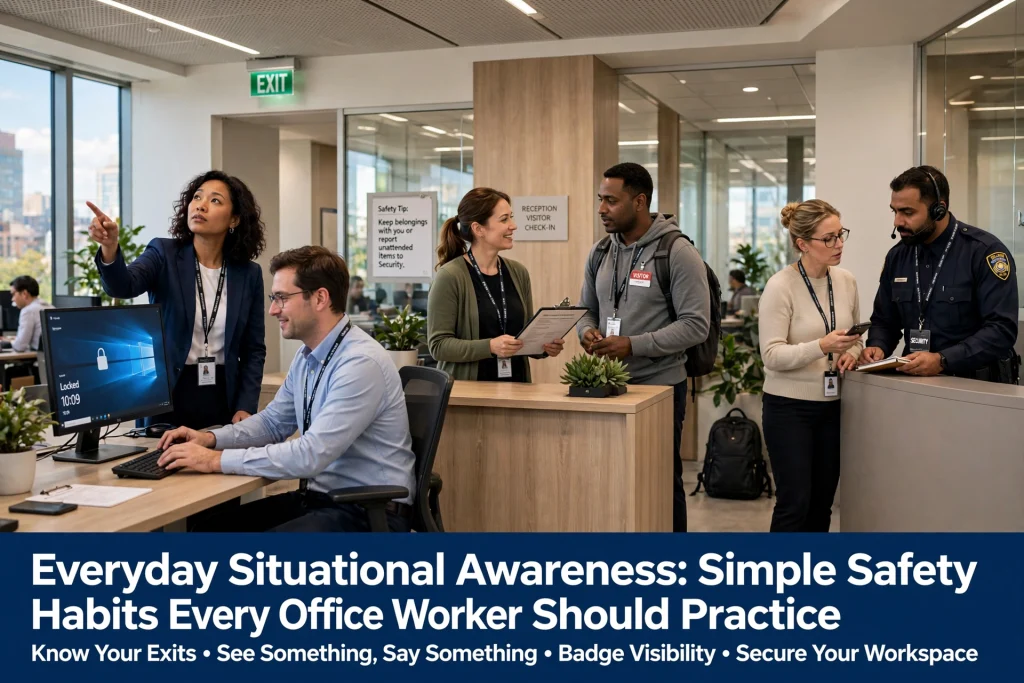
Situational awareness is a perishable skill that must be cultivated and practiced. A workforce that understands how to observe, assess, and react to their environment is a company’s strongest defense against workplace violence, accidents, and security breaches.
Blue Training Academy delivers specialized, engaging corporate safety workshops designed to teach your employees practical situational awareness, conflict de-escalation, and emergency response protocols.
Make proactive safety a part of your corporate culture. Book a situational awareness workshop for your team with Blue Training Academy today.
- Website: bluetrainingacademy.com