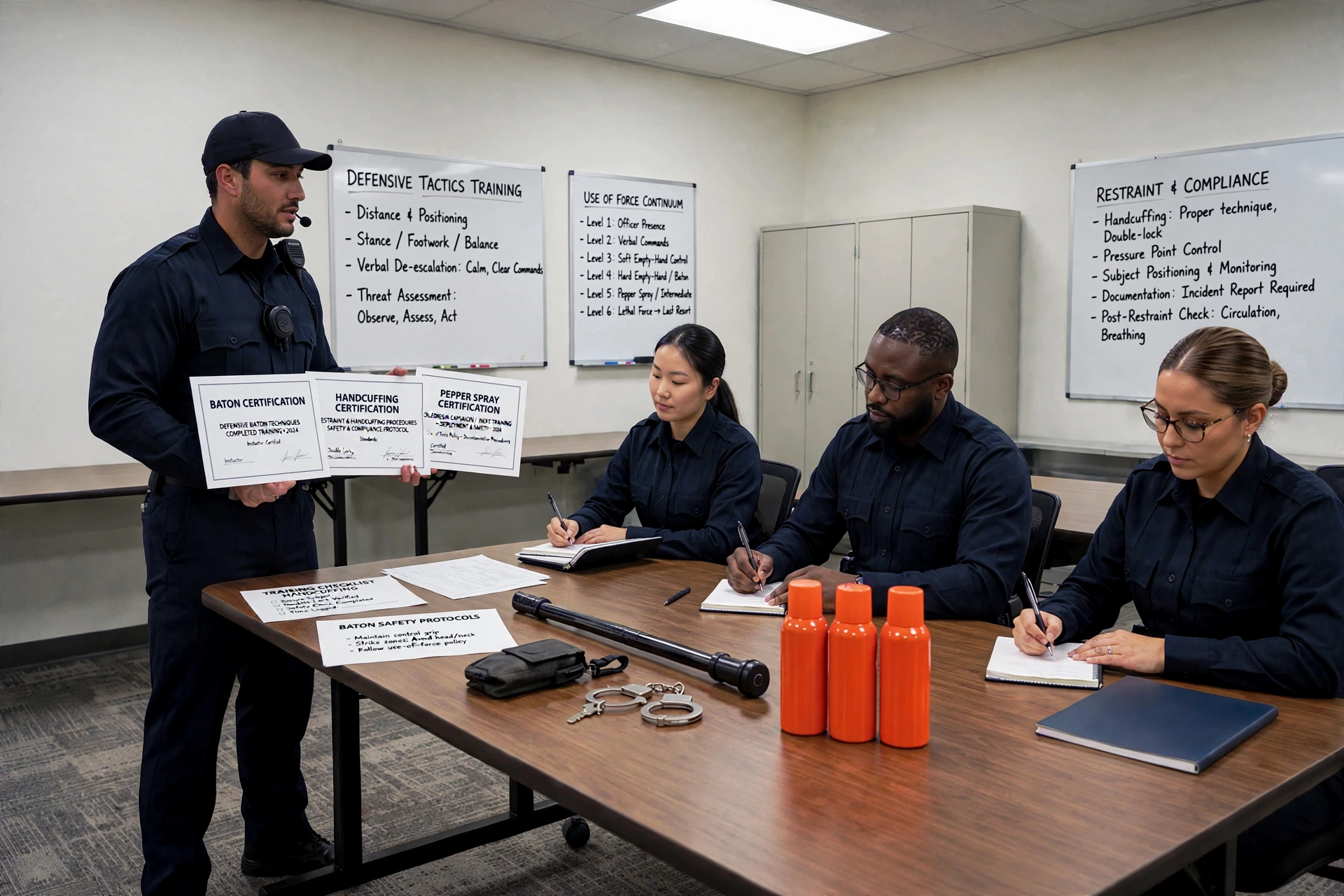
In the private security sector, physical presence and verbal authority resolve the majority of daily conflicts. However, when an aggressive individual refuses to comply, threatens violence, or breaches a restricted perimeter, security personnel must possess the skills and legal certifications to protect themselves and others.
Relying on untrained physical force creates severe legal liabilities, risks officer injury, and leads to excessive force lawsuits. Specialized non-lethal defensive certifications bridge the gap between verbal de-escalation and lethal force, giving officers the tools needed to control confrontations safely and legally.
Blue Training Academy delivers comprehensive, hands-on certification courses designed to equip security officers with tactical proficiency, use-of-force legal knowledge, and confidence under pressure.
The Value of Less-Lethal Certifications in Modern Security
Professional guard companies and commercial clients prioritize officers holding advanced defensive certifications. Possessing certified credentials in intermediate weapons demonstrates discipline, reduces corporate liability, and qualifies guards for higher-tier patrol and executive protection assignments.
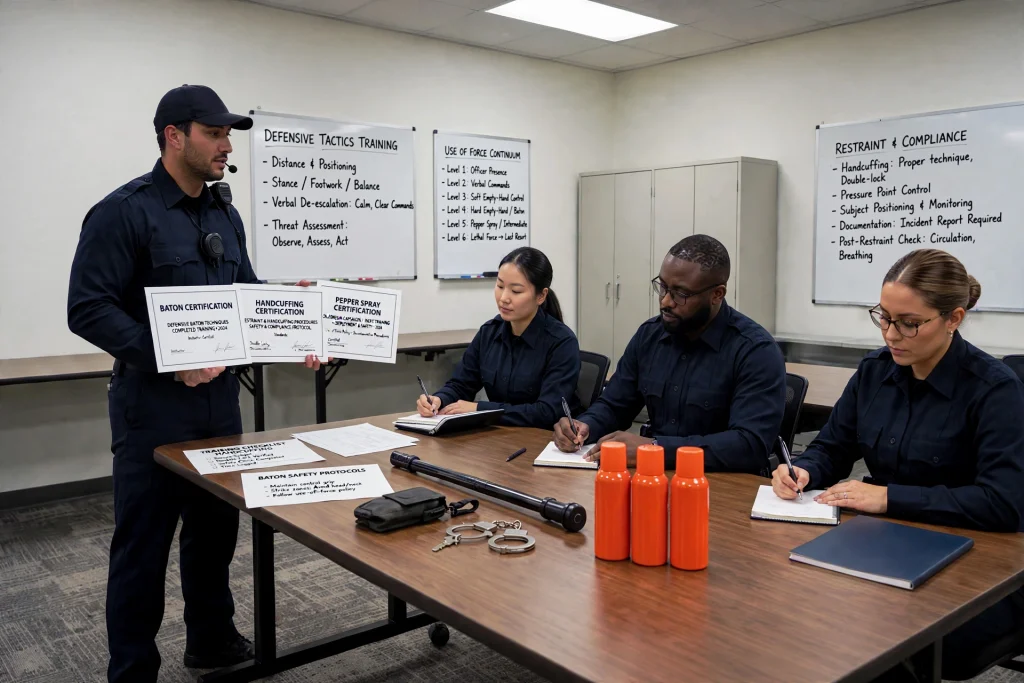
Key benefits of obtaining formal intermediate weapons certifications include:
- Liability Mitigation: Certification proves that an officer was formally trained in industry-standard use-of-force frameworks and state-approved application methods.
- Expanded Employment Opportunities: Premium commercial accounts, transit hubs, and high-risk industrial facilities require officers certified in intermediate tools.
- Enhanced Tactical Confidence: Muscle memory gained through practical drills enables officers to respond calmly and decisively during violent encounters.
1. Expandable and Straight Baton Certification
The tactical baton is one of the most effective non-lethal impact tools available for physical defense, subject control, and perimeter management. Improper baton usage, however, can result in catastrophic injuries or felony criminal charges.
A comprehensive baton training curriculum at Blue Training Academy covers:
- Target Zones and Prohibited Strikes: Understanding green (low trauma/large muscle mass), yellow (moderate trauma/skeletal joints), and red (fatal/head, neck, spine) strike zones to ensure legal compliance.
- Rapid Deployment and Stances: Mastering quick-draw mechanics, dynamic body positioning, and defensive blocking techniques from concealed or open carry.
- Strikes, Jabs, and Blocks: Executing controlled power strikes and blocking incoming weapons such as bats, pipes, or edged objects.
- Retention and Disarm Defense: Techniques to prevent an assailant from stripping or grabbing the baton during a physical struggle.
2. Professional Handcuffing and Subject Restraint Certification
Applying handcuffs is statistically one of the most dangerous moments during a security confrontation. Once an officer moves within arm’s reach to apply restraints, the subject often resists or attempts an assault.
Certified handcuffing courses teach officers how to establish control before and during the application of mechanical restraints:
- Compliant vs. Non-Compliant Application: Step-by-step mechanics for securing subjects who are following commands versus individuals actively resisting arrest.
- Grip, Positioning, and Approach: Utilizing the tactical “bladed stance” and proper wrist-locking holds to control leverage before drawing handcuffs.
- Double-Locking and Medical Safety: Enforcing double-locking procedures to prevent overtightening, nerve damage, and medical distress while in custody.
- Searching Techniques Post-Restraint: Conducting thorough, systematic pat-downs to locate concealed weapons, drug paraphernalia, and contraband safely.
3. Pepper Spray (OC Spray) Certification
Oleoresin Capsicum (OC) spray—commonly known as pepper spray—is an invaluable standoff tool that temporarily incapacitates violent individuals from a safe distance without causing permanent physical trauma.
Professional pepper spray certification ensures officers can deploy chemical agents effectively in dynamic environments:
- Formulation Types and Delivery Systems: Differentiating between streams, foams, gels, and foggers, along with their performance in outdoor, windy, or enclosed settings.
- Safe Engagement Distance and Aiming: Deploying bursts at optimal standoff distances while targeting the facial triangle (eyes, nose, and mouth) for immediate incapacitation.
- Cross-Contamination Management: Preventing self-contamination, protecting bystanders in crowded lobbies or retail stores, and maintaining situational awareness.
- Decontamination and Duty of Care Protocols: Managing subject aftercare, flushing eyes with saline/water, monitoring breathing, and calling medical support immediately after securing the scene.
Understanding the Use-of-Force Continuum
Tools are only as effective as the judgment behind them. Every certification program integrates thorough instruction on the Use-of-Force Continuum, ensuring officers understand when and how to escalate or de-escalate their defensive response.
- Officer Presence & Professional Demeanor: Setting boundaries through visual authority and clear uniform standards.
- Verbal Direction: Issuing clear, authoritative instructions to defuse non-violent non-compliance.
- Empty-Hand Control: Using soft holds and joint locks to guide resistant subjects.
- Intermediate Less-Lethal Weapons: Deploying batons, handcuffs, and OC spray against active aggression.
- Lethal Defense: Understanding the strict legal boundaries reserved only for imminent threats of serious bodily harm or death.
Advance Your Security Career with Blue Training Academy
Whether you are launching your security career or an experienced guard looking to expand your tactical qualifications, verified certifications in intermediate weapons are essential.
Blue Training Academy provides hands-on, instructor-led training that meets and exceeds state licensing standards, preparing officers for the real challenges of physical security.